

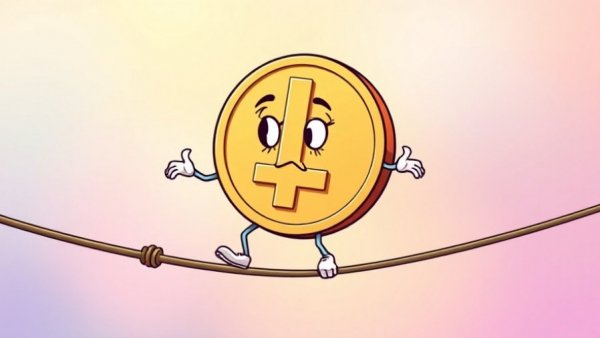
The Growing Concerns Around Tether's Financial Stability
Tether, the issuer of the widely-used stablecoin USDT, recently invoked the financial crisis exposed in the film The Big Short to challenge S&P Global Ratings' assessment of its reserves. Despite significant criticisms regarding its reserve composition, S&P’s latest report maintains Tether’s stability score at a weak five, a position unchanged since November 2025. This decision raises important questions about the stability of stablecoins and the inherent risks they present to investors and the cryptocurrency market as a whole.
Understanding S&P's Rating and its Implications
According to S&P's assessment, as of September 2026, Tether holds a substantial proportion of its reserves in high-risk assets, including Bitcoin and corporate bonds, which currently account for 28% of USDT's reserves, up from 24% the previous year. Such fluctuations indicate a potential vulnerability: a drastic decline in these asset values could jeopardize the stablecoin's dollar peg.
While Tether claims it maintains a solid asset-to-liability ratio—with approximately $191.5 billion in assets against $183.5 billion in liabilities—the lack of clear segregation of these assets raises red flags. Critics suggest that a drop in asset value without adequate backing could lead to undercollateralization, undermining trust in the stablecoin.
Regulatory Oversight: Is It Enough?
Tether’s operational shift to El Salvador has brought additional regulatory scrutiny. The National Commission of Digital Assets (CNAD) in El Salvador mandates that 70% of reserves are held in easily liquidatable assets. However, Tether's interpretation of 'liquid assets' is broad, allowing for the inclusion of inherently riskier assets. This regulatory landscape has created concerns on whether Tether’s operations align with the stringent oversight that is typical in major markets like the US and Europe.
Audit Transparency: The Need for Clarity
In an effort to affirm its fiscal responsibility, Tether underwent an independent audit by KPMG. While KPMG issued an unqualified opinion on Tether's 2025 financial statements, S&P's report notes the absence of publicly available audit documentation. This lack of transparency complicates investor confidence, as it limits the ability for independent verification of Tether's claims regarding its reserves.
Stablecoins such as USDT typically undergo monthly attestations, yet Tether's quarterly reports may not provide sufficient oversight by modern standards. The need for clearer disclosures, including the identification of custodians and specific asset management strategies, becomes evident as market participants increasingly demand accountability.
Tether's Response: A Tenacity Against Criticism
In response to S&P’s ratings and industry skepticism, Tether has maintained that its structure is robust enough to withstand financial turbulence. Tether's CEO, Paolo Ardoino, previously highlighted historical failures in traditional finance as evidence of systemic flaws, echoing the themes of The Big Short. This narrative serves not only as a defense but positions Tether within the broader crypto context of challenging established financial norms.
Tether's insistence on exceeding its liabilities suggests a commitment to maintaining a buffer against volatility, yet continuous scrutiny highlights the tension between operational transparency and the inherent nature of high-risk investments. As distributed ledger technology continues to evolve, firms like Tether must grapple with the balance of innovation, regulatory compliance, and investor assurance.
A Call for Enhanced Regulatory Frameworks
The ongoing debates surrounding Tether's stability, regulatory adherence, and asset management practices reinforce an urgent need for enhanced frameworks within the cryptocurrency sector. As stablecoins become increasingly integrated into daily financial activities, delineating clear guidelines for asset backing and disclosure will be essential to foster increased user trust and confidence in digital currencies. Moving forward, the industry must advocate for robust regulations that ensure financial safety while promoting innovation.













Write A Comment